Denmark
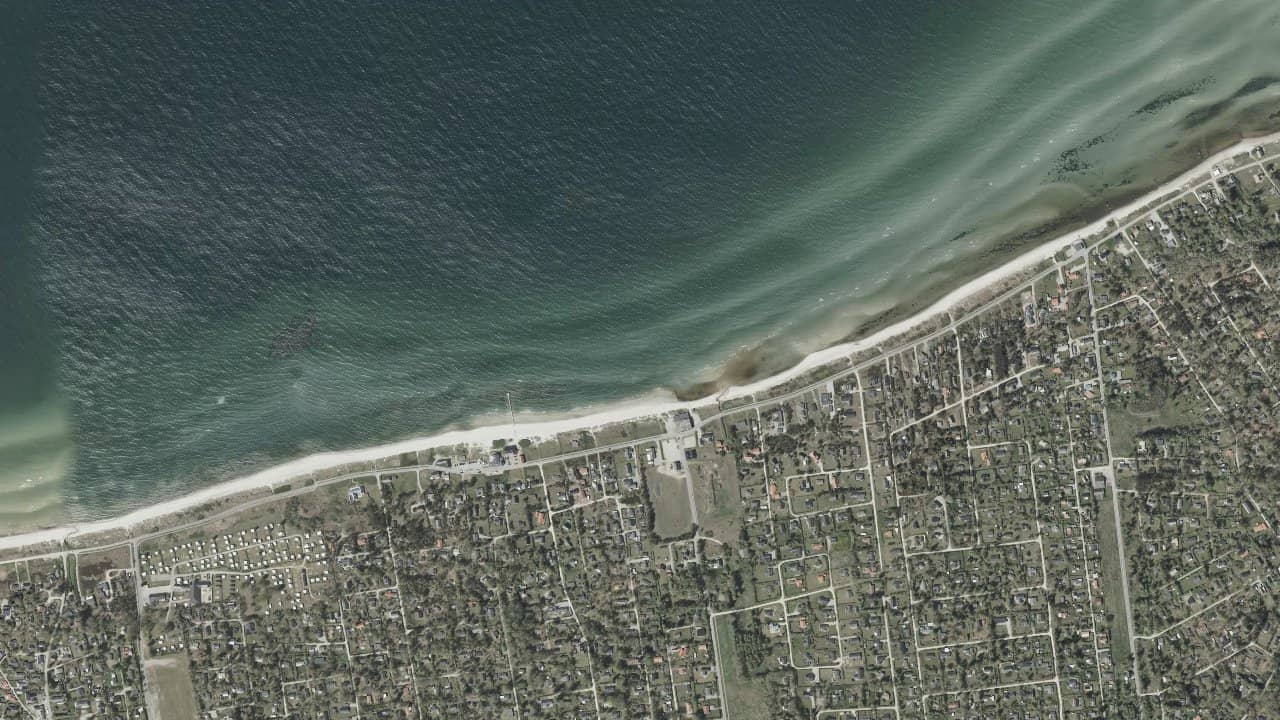
Fjellerup Strand is a typical beach on the east coast of Denmark, in the Central Jutland region. It attracts local kiters for its fine sand and open space facing the Baltic Sea.
The spot offers a calm atmosphere, with dunes in the background and an unobstructed view of the horizon. It is a popular place for quiet sessions, especially when the northeast wind picks up.
Close to small towns like Fjellerup, you can easily find places to eat after a session.
Les données de vent affichées ici proviennent d’ERA5 (via Open-Meteo) sur 4 ans, retraitées pour refléter des conditions réalistes.
👉 Le vent moyen a été calibré pour éviter la sous-estimation habituelle des modèles.
👉 Les rafales ont été corrigées par un ratio médian afin d’éviter des valeurs extrêmes irréalistes.
👉 Chaque jour est résumé par le vent médian (P50) observé pendant les heures utiles (8h–20h), puis classé dans des plages de vent.
👉 Le mode pondéré mélange vent moyen et rafales pour refléter au mieux le vent ressenti.
The Fjellerup Strand spot works well with wind coming from N, NNE, NE, ENE or E, blowing side-shore or side-on relative to the west-facing beach. These directions provide a clean water surface for jumps and freestyle. The launch area is directly from the wide, obstacle-free sand, with a spacious take-off zone on the beach.
The navigation area extends several hundred meters offshore, not depending on tides, which simplifies session planning. However, be cautious on days with dominant frontal wind from SW to NW, which can create chop and small waves. Locals prefer afternoons when the thermal reinforces the wind.
The water remains generally smooth with good winds but can become choppy in storm conditions. Prefer the central area of the beach to avoid crowded zones with bathers in summer.
Ideal conditions are a wind from NE to E at 15-25 knots, side-shore, for a smooth water surface and consistent jumps. Air temperature above 10°C for comfort.
The water state is often choppy with small waves of 1-2 m when the wind is onshore. With side-shore, it becomes flatter and more rideable.
The wide beach allows for good maneuvering space, even with moderate swell.
Currents are generally moderate, around 1 m/s directed towards the NNE depending on local conditions. They remain manageable for experienced kiters.
Tides have a low amplitude in the Baltic Sea, with no major impact on navigation. Always check forecasts for days with strong winds.
Opt for kite sizes of 9 to 12 m² in typical conditions of 12-20 knots. Go larger in light wind and smaller for frontal gusts.
The wind regime is dominated by frontal systems, with gusts from SW, WSW, W, WNW, NW on average. Ideal winds for kiting come from the north to east, often reinforced by coastal thermals in the afternoon.
Strength varies from 10-25 knots in season, with very windy days in autumn. No specific local name, but it is typical frontal wind from the Baltic.
The climate at Fjellerup Strand is oceanic, with mild summers around 15-20°C and cold winters around 0-5°C. Rainfall is frequent throughout the year, but the intermediate seasons are drier.
The best months for kitesurfing are from April to October, with more consistent winds. In winter, temperatures drop and days are short.
The depth is gradual with a clean sandy bottom. You can stand up to about 100-200 m from the shore, ideal for relaunches.
The water temperature ranges from 4°C in winter to 15-20°C in summer. A full wetsuit is mandatory all year round, with thick neoprene in the cold season.