Canada
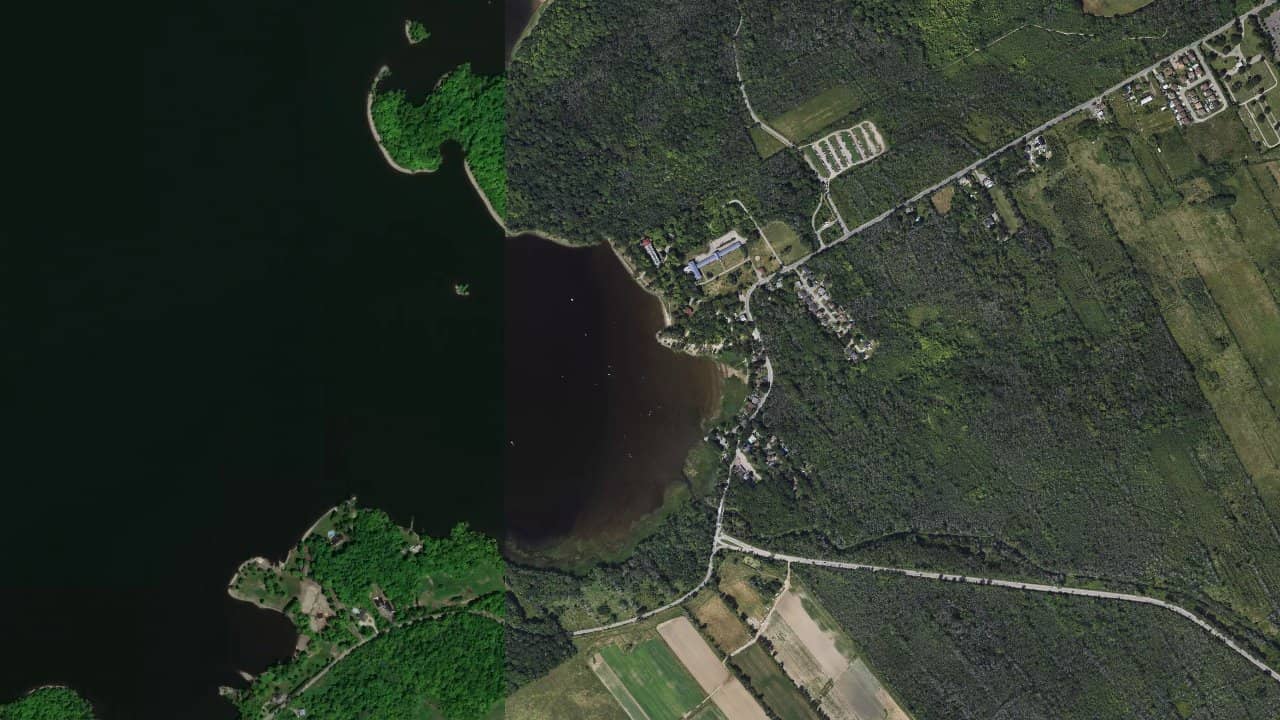
L'Anse-à-l'Orme is a spot in the west of Montreal, on Lake des Deux-Montagnes, well known to local riders for the west wind and the simple atmosphere of the nature park. It is a popular place to kitesurf when the weather aligns, with convenient access and an area suitable for kitesurfing.
The spot is mainly interesting for riders looking for a session on often relatively calm water, with easy access from the shore. The place is also used by windsurfers and non-motorized boaters, confirming its profile as a versatile water sports spot.
Les données de vent affichées ici proviennent d’ERA5 (via Open-Meteo) sur 4 ans, retraitées pour refléter des conditions réalistes.
👉 Le vent moyen a été calibré pour éviter la sous-estimation habituelle des modèles.
👉 Les rafales ont été corrigées par un ratio médian afin d’éviter des valeurs extrêmes irréalistes.
👉 Chaque jour est résumé par le vent médian (P50) observé pendant les heures utiles (8h–20h), puis classé dans des plages de vent.
👉 Le mode pondéré mélange vent moyen et rafales pour refléter au mieux le vent ressenti.
L'Anse-à-l'Orme mainly works with W and NW winds, which come in well relative to the shore and generally offer a side-shore to side-on angle depending on the exact wind orientation. The water is that of Lake des Deux-Montagnes, thus an inland environment exposed to local fetch, with navigation that can quickly become interesting when the wind gains texture.
The launch is from the nature park, with ramps and fairly clear access to rig and depart. Available information also confirms the presence of facilities for launching and an environment appreciated for windsurfing, which supports the idea of an accessible spot but requires staying organized on the beach and at the water's edge.
The spot is mainly suitable for freeride and foil navigation on clean wind days, but it can also offer chop when the wind strengthens or shifts slightly. One must remain attentive to local traffic, other park users, and the launch area, as usable space can be limited depending on the crowd.

The best sessions occur with a west to northwest wind, well established and clean enough to feed the shore. A wind of 19 to 25 knots is generally very interesting for comfortable navigation at this type of spot.
When the wind is stable and the water remains relatively clean, the spot becomes more enjoyable for freeride and foil. Conditions are less favorable when the wind is too weak or too gusty.
The state of the water is often flat to chop, with water being quite manageable in moderate wind and more choppy when the wind picks up. On the cleanest days, the spot can offer fairly smooth navigation for foil or freeride.
The surface quality depends a lot on the intensity and direction of the wind. With a good W or NW, the session generally becomes more consistent, but the water can remain technical if the wind is irregular.
The current is generally weak to moderate in this area of the lake, but it can vary depending on water level, wind, and local shoreline configuration. There is no real tidal constraint like at sea, so the reading of the spot is mainly based on wind and exposure.
The most important parameter remains the management of drift and returning to the shore if the wind drops, as one navigates on a large inland body of water where one must keep some margin.
With a wind around 19.6 knots, the most consistent sizes are generally 7 to 10 m² depending on the build, level, and practice. A light rider can often start with a 7 or 8 m², while an average build will more often be between 8 and 10 m².
Below this range, a larger kite is often needed to start properly, especially if the wind is irregular. Above this, one quickly switches to smaller kites to maintain control.
The local wind regime is dominated by west and northwest flows, which correspond well to the site's exposure. Local sources clearly mention the dominant west winds, which are the most interesting for riders at this spot.
Depending on the days, the wind can come more regularly or be influenced by the passage of weather systems. When it establishes correctly, it allows for solid navigation, with interesting potential for freeride on inland water.
The climate of Montreal is continental, with cold winters, very variable interseasons, and generally warm summers. The kitesurfing season mainly extends from spring to autumn, with often more interesting periods when pressure contrasts are marked.
In spring and autumn, temperatures can remain cool on the water and on the shore, even when the wind is good. In summer, the air becomes milder, but local thermals and frontal passages can still provide good sessions.
The depth is generally shallow near the shore and becomes more variable as you move away, with a bottom that can remain accessible depending on the area. Local information mentions a site with shallow water, which supports a comfortable launch in certain sectors.
The bottom is not described as perfectly uniform, and one must keep in mind the possible presence of mussels and local irregularities. For a beginner, the spot remains more reassuring than many other open areas, but it still requires careful spotting of the launch.
The water is very cold in spring and often remains cool until early summer. In summer, it becomes more pleasant, but it generally stays cooler than in warm sea.
In autumn, the temperature drops quickly, so the wetsuit often remains necessary for a good part of the season. In winter, the spot is obviously no longer suitable for classic kitesurfing without specific equipment.