Zeebrugge

Zeebrugge - Strand Zeebrugge

Belgium

🎓Inter · Conf
🌊Flat
💨22.0 nd
☀️11.6°C

Zeebrugge

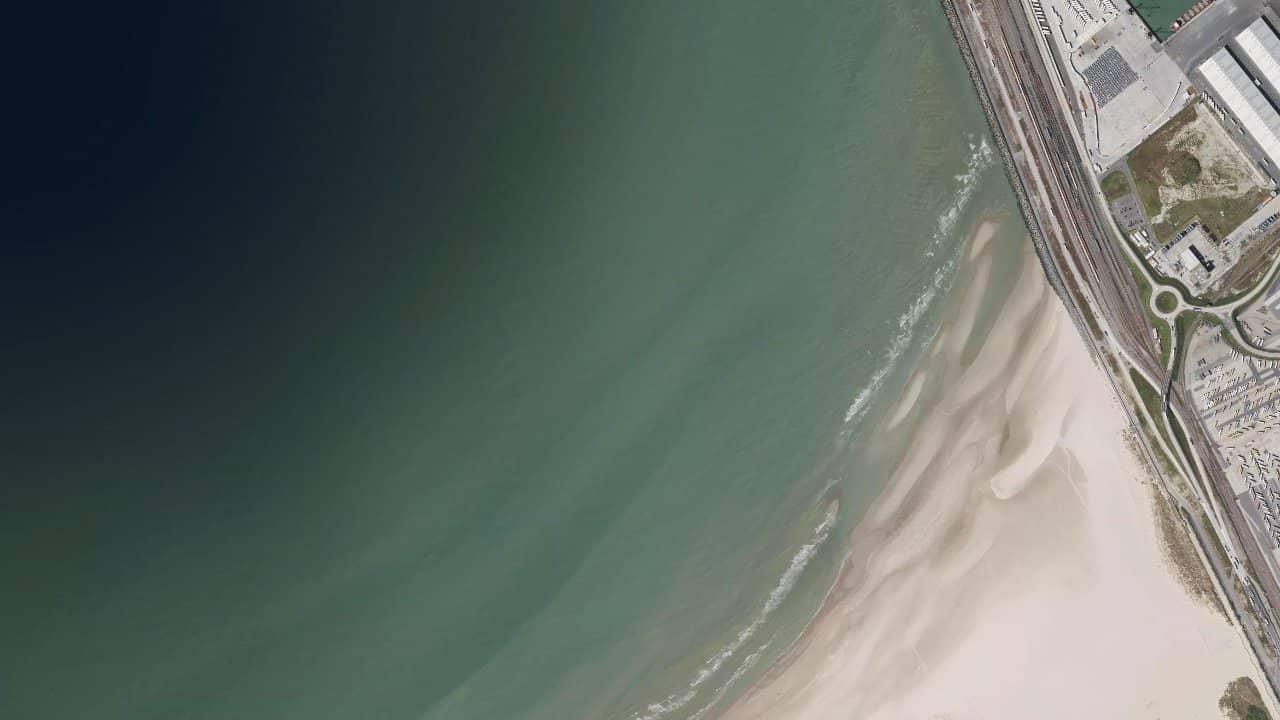
Strand Zeebrugge is located in West Flanders, Belgium, near the largest container port in the country. The beach offers a unique setting where the industrial atmosphere of the port meets a functional and well-organized kitesurfing area. It is a popular spot among the local community for its accessibility and consistent conditions.

Behind the port's breakwater, the water becomes very flat and glassy, making it an ideal place to progress. The kitesurfing area is well-defined and managed by the Surfclub Icarus, which offers the largest kitesurfing area in Belgium without breakwaters. Access is easy from Brussels via the E40.

Les données de vent affichées ici proviennent d’ERA5 (via Open-Meteo) sur 4 ans, retraitées pour refléter des conditions réalistes.
👉 Le vent moyen a été calibré pour éviter la sous-estimation habituelle des modèles.
👉 Les rafales ont été corrigées par un ratio médian afin d’éviter des valeurs extrêmes irréalistes.
👉 Chaque jour est résumé par le vent médian (P50) observé pendant les heures utiles (8h–20h), puis classé dans des plages de vent.
👉 Le mode pondéré mélange vent moyen et rafales pour refléter au mieux le vent ressenti.

  • 🟢 10–16 nds : vent faible mais navigable (notamment en foil).
  • 🟡 16–22 nds : plage idéale, conditions confortables pour la majorité.
  • 🔴 22–28 nds : vent fort, réservé aux riders expérimentés.
  • 🟣 28+ nds : conditions extrêmes, navigation engagée.

Localisation & Points d'intérêt

Informations utiles

Type d’eau
Profondeur
Navigabilité
Marée haute
flatflat
Pied
Oui
Marée basse
flatflat
Pied
Oui
Conditions de navigation

Strand Zeebrugge benefits from a regular and consistent wind regime thanks to its position behind the port's breakwater. The dominant winds come from the northwest, north, and west, creating very favorable side-shore to side-on conditions. With a northwest wind, the water becomes exceptionally flat and glassy, perfect for progressing riders.

The spot works well across the entire beach, with easy entry and a clear launch area. The gradual depth allows for safe navigation. However, it is important to stay strictly within the designated areas and away from the port's navigation channels, where maritime traffic is intense. The port's breakwaters create specific wind channeling effects that can make conditions gusty at times.

With an east wind, the spot offers more dynamic wave circus conditions. The large tidal range of the Belgian coast also influences conditions: at low tide, the water remains flat but narrower, while at high tide, the available water surface increases.


Vent ideal
NWdominant
Ndominant
Wdominant

Ideal conditions occur with a wind from northwest, north, or west between 16 and 22 knots. At this strength, the water becomes exceptionally flat and glassy, perfect for progressing safely. The side-shore to side-on orientation of these winds creates stable and predictable conditions.

With 22 to 28 knots, conditions remain comfortable for most experienced riders. Below 16 knots, the spot remains navigable, especially on foil, but conditions become lighter. East winds offer an alternative with wave circus for riders seeking more dynamics.

État de la mer

The water at Strand Zeebrugge is very flat and glassy when the wind comes from the northwest or north, thanks to the protection offered by the port's breakwater. This is one of the main attractions of the spot for progressing riders. With east winds, the water becomes more choppy with wave circus, offering more dynamic conditions.

The gradual depth and sandy bottom create a safe and predictable environment. The water generally remains clear to moderately clear depending on tide conditions and port activities.

Courants marins

The current at Strand Zeebrugge is generally weak to moderate, but caution is advised near the port's navigation channels where it can become more pronounced. The characteristic large tidal range of the Belgian coast significantly influences conditions: the tidal amplitude can reach several meters, altering the available water surface and local currents.

At low tide, the navigable area shrinks but remains passable. At high tide, more space is available. It is recommended to consult the tide tables before heading out.

Taille de kite recommandée

With an average wind of 16 to 22 knots, the recommended sizes are 9 to 11 m² for most riders. In light conditions (10-16 knots), a 12 to 14 m² will be more appropriate, especially for foil. With stronger winds (22-28 knots), a 7 to 9 m² offers more control.

The choice also depends on the rider's weight and the type of equipment used. To progress safely on the flat water, a versatile kite of 10 to 11 m² is a good compromise.

Météo & vent

The wind regime at Strand Zeebrugge is dominated by northwest, north, and west winds, particularly active in winter and spring. These winds are generally consistent and regular, with an average strength of 16 to 22 knots in the best conditions. The spot can experience gusts due to the wind channeling by the port's breakwaters.

East winds create more choppy conditions with wave circus, while offshore winds (east-southeast) are strictly prohibited along the entire Belgian coast for safety reasons. Light winds (10-16 knots) remain navigable, especially on foil.

Climat

The Belgian coast experiences a temperate oceanic climate with cool winters and mild summers. The best months for riding are December, January, February, and March, when Atlantic depressions bring consistent and sustained winds. Spring and autumn also offer good conditions, particularly in September, October, and November.

Winter temperatures hover around 5 to 8°C, while in summer they reach 18 to 22°C. The region receives regular rainfall throughout the year.

Profondeur

The depth at Strand Zeebrugge is gradual with a sandy bottom, creating a safe and predictable environment for all levels. You can stand up to about 50 meters from the shore, allowing for easy entry and gradual progression to deeper areas.

The sandy bottom provides good grip and limits the risk of falling on a rocky substrate. The large tidal range of the Belgian coast alters the effective depth: at low tide, the navigable area shrinks but remains passable, while at high tide, more depth is available.

Température de l’eau

The water of the North Sea at Strand Zeebrugge is very cold in winter, with temperatures around 5 to 8°C from December to March. A 5/4 mm wetsuit is essential during this period. In spring (April-May), the water gradually warms to 10 to 12°C, allowing for a 4/3 mm wetsuit.

In summer (June-August), the temperature reaches 16 to 18°C, making a 3/2 mm wetsuit or even a shorty possible. In autumn (September-November), the water cools to 12 to 15°C, requiring a 4/3 mm wetsuit. The best months for riding (December to March) demand significant thermal protection.

Avis des kitesurfers

Chargement des avis...

Laisser un avis

0/500 caractères

Votre avis sera modéré avant publication

← Retour à la recherche