Pelican Point - Pelican Point Beach
Australia
Pelican Point
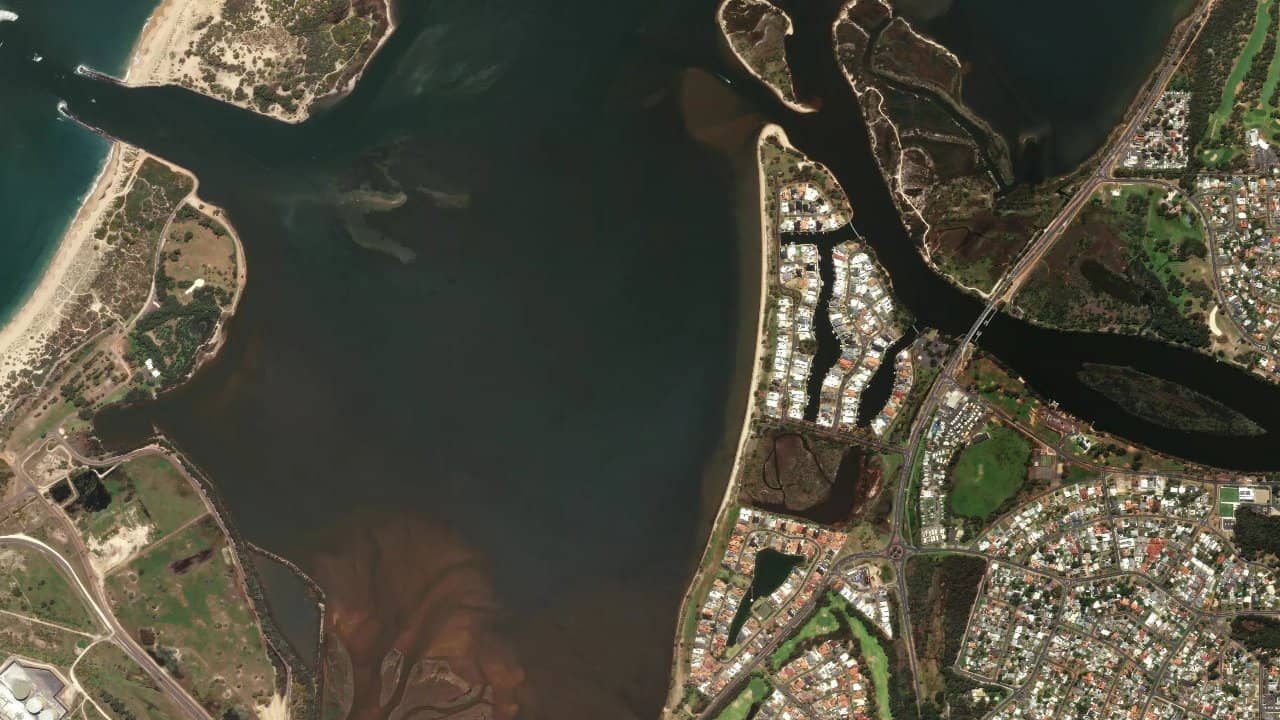
The beach at Pelican Point, located on the north bank of the Swan River near Perth in Western Australia, is a popular spot for kiters due to its shallow and flat water. It is easily accessible from the city center, about 8 km via Mounts Bay Road. It's a convenient place for a quick session after work, with a local and relaxed atmosphere.
The spot offers beaches on three sides, but it is mainly South Beach that attracts kiters with its cross-onshore wind. The launch is directly into the water due to the narrow tree-lined beach and walls. Riders rig on the grass nearby to avoid obstacles.
Despite its urban proximity, it is important to respect the protected bird areas, which requires good control to stay upwind.
Les données de vent affichées ici proviennent d’ERA5 (via Open-Meteo) sur 4 ans, retraitées pour refléter des conditions réalistes.
👉 Le vent moyen a été calibré pour éviter la sous-estimation habituelle des modèles.
👉 Les rafales ont été corrigées par un ratio médian afin d’éviter des valeurs extrêmes irréalistes.
👉 Chaque jour est résumé par le vent médian (P50) observé pendant les heures utiles (8h–20h), puis classé dans des plages de vent.
👉 Le mode pondéré mélange vent moyen et rafales pour refléter au mieux le vent ressenti.
- 🟢 10–16 nds : vent faible mais navigable (notamment en foil).
- 🟡 16–22 nds : plage idéale, conditions confortables pour la majorité.
- 🔴 22–28 nds : vent fort, réservé aux riders expérimentés.
- 🟣 28+ nds : conditions extrêmes, navigation engagée.
Localisation & Points d'intérêt
Informations utiles
The wind is generally onshore or cross-onshore from the southwest (SW), south (S), southeast (SE) or east (E), making takeoff technical as you need to walk in the water to launch the kite. The launch area is very narrow with obstacles like trees, walls, and pedestrians on the tiny beach, so you need to ride far from the launch and landing zone.
The water is flat and very shallow in several areas, ideal for freestyle or slalom, with a sandy bottom where you can stand for a long time. Conditions do not depend much on tides, but be careful of areas marked by yellow buoys prohibited for the protection of nesting birds – stay upwind in sometimes gusty winds.
In summer, light east winds may blow in the morning on very hot days. Rig on the grass and pack up quickly after the session to avoid obstructing passersby. The spot works well in SE winds, which is rare in Perth.
Ideal conditions are with winds from SE, ESE, E or SW cross-onshore between 15-25 knots, for a flat water surface without too much shorebreak. Avoid strong onshore winds that complicate launching.
The water surface is flat and shallow, with a sandy bottom providing standing depth for long distances. Little chop except in strong onshore winds, perfect for freestyle or advanced learning.
Currents are generally weak in this sheltered area of the Swan River. Tides have little impact on sailing conditions, but it is important to monitor variations near the protective buoys.
Opt for sizes of 9 to 12 m² in typical moderate winds of Perth, or 7-9 m² when the sea breeze picks up strongly in the afternoon. Adjust according to your weight and the light morning wind.
The predominant sea breeze comes from the southwest (SW) in the afternoon, often cross-onshore at South Beach, with variable but sometimes unreliable strengths. In summer, light thermal winds from the east (E) or southeast (SE) rise in the morning during heat spells.
The regime is typical of the sea breeze in Australia, enhanced by local thermals over the Swan River.
The climate around Perth is Mediterranean, with hot and dry summers from November to March, where temperatures easily reach 25-35°C. Winters are mild and wet from May to August, with lows around 10-15°C.
The best months for kiting are from October to March, with a regular sea breeze in the afternoon. Year-round is viable according to the data, but summer offers more reliability.
The depth is very gradual with a sandy bottom, allowing standing depth for several dozen meters from the shore in the main areas.
In summer (Dec-Feb), the water is warm around 22-25°C. In winter (Jun-Aug), it drops to 18-20°C, a shorty wetsuit is often sufficient.