Kiteloopers - Kitesurfing spots, trips and destinations worldwideKiteloopers - Kitesurfing spots, destinations and kite trips worldwide
MapDestinationsBlog
Log in

Project

  • About
  • Contact

Legal

  • Terms
  • Privacy
  • Cookies
  • Legal notices
  • Support

Community

  • Spots
  • Blog
  • Schools
  • Instructors
  • Accommodations
  • Trips
  • KiteMarket

Social

  • Instagram
  • Facebook
© 2026 Kiteloopers — All rights reserved
Ainsdale-on-Sea

Ainsdale-on-Sea - Ainsdale Beach

Royaume-Uni

🎓Inter · Adv
🌊Flat
💨—
☀️—

Ainsdale-on-Sea

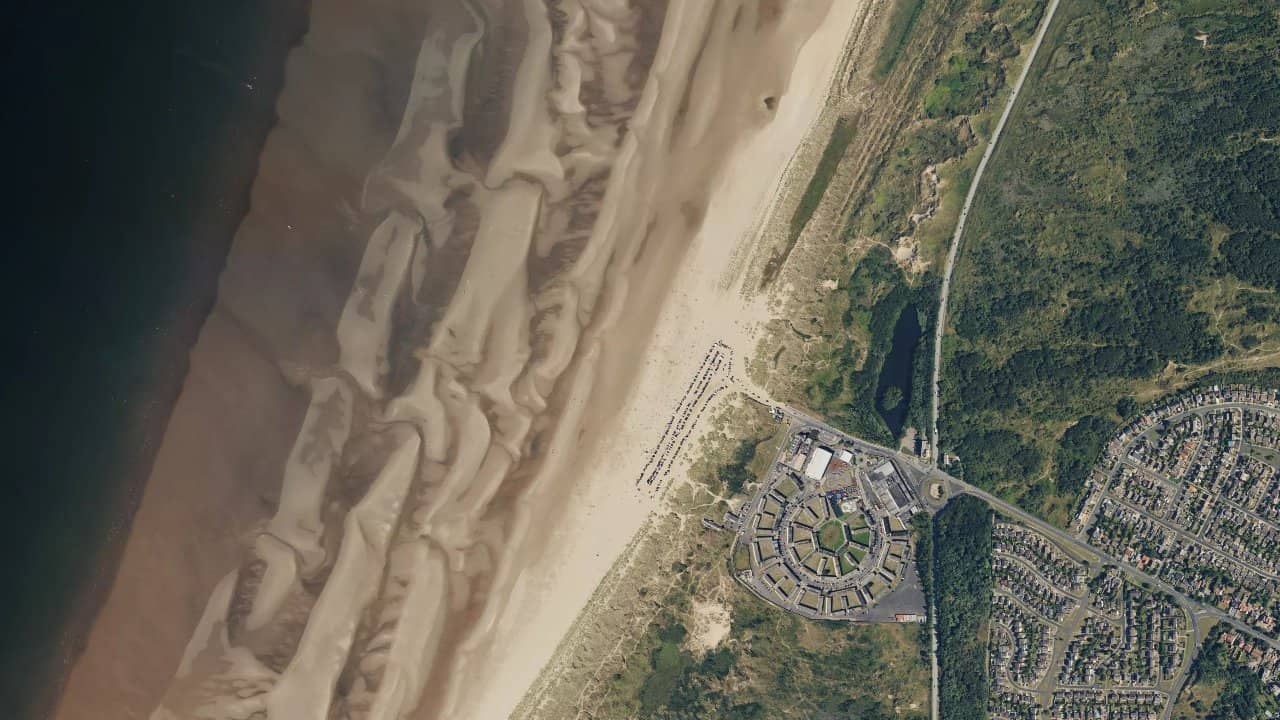
Ainsdale Beach, in Ainsdale-on-Sea, is a long open beach on the Merseyside coast, known for its wide spaces and very sporty atmosphere. It is a spot appreciated by local kitesurfers for its dedicated areas for traction activities and its easy-to-read layout.

The beach is mainly sought after when the wind comes in well from the west to northwest, with navigation often accessible at different tide phases. The site remains frequented by riders looking for a wide, practical, and fairly consistent setting to navigate without unnecessary complications.

The wind data shown here comes from ERA5 (via Open-Meteo) over 4 years, reprocessed to reflect realistic conditions.
👉 Average wind has been calibrated to avoid the usual underestimation of models.
👉 Gusts have been corrected by a median ratio to avoid unrealistic extreme values.
👉 Each day is summarized by the median wind (P50) observed during useful hours (8am–8pm), then classified into wind ranges.
👉 The weighted mode mixes average wind and gusts to best reflect felt wind.

  • 🟢 10–16 kts: light but sailable wind (especially on foil).
  • 🟡 16–22 kts: ideal range, comfortable conditions for most.
  • 🔴 22–28 kts: strong wind, reserved for experienced riders.
  • 🟣 28+ kts: extreme conditions, committed riding.

Location & Points of interest

Useful information

Water type
Depth
Rideability
High tide
chopchop
Partial
Tech.
Low tide
flatflat
Standable
Yes
Riding conditions

The spot mainly works with a wind from the W to NW, and several kite guides also cite nearby orientations such as SW, WSW, WNW, and NNW as exploitable depending on the day's configuration. The beach generally offers navigation between flat, chop, and small waves, with a smoother water surface when the tide forms a shallow lagoon at mid-tide. The best operation is often reported at mid-tide to low tide, with particular caution around 2 hours before and after high water according to local guides.

Launching is done from the large sandy beach, with plenty of space to prepare the kite and take off, which limits congestion when the beach is not too crowded. Ainsdale is also known for its designated areas for traction activities, which helps separate uses and maintain clear organization on the sand. The bottom is sandy and the spot is often described as shallow over a large part of the navigable area, which facilitates access for riders comfortable with the tides. Conditions vary quickly with the water level, so it is necessary to adapt the navigation area to the current tide and avoid straying unnecessarily when the water surface tightens.


Ideal wind
Wdominant
NWdominant

The best sessions occur with a wind from W to NW, or in the neighboring sectors often cited by local riders, with sustained but regular intensity. A well-established wind allows for enjoying both the large beach for launching and the shallow area when the tide is favorable.

The spot becomes particularly interesting at mid-tide to low tide, when the lagoon and sandbanks offer a cleaner water surface. For many riders, it is this compromise between space, crosswind, and shallow water that adds value to the site.

Sea state

The water surface is often a mix of flat and chop, with sometimes small waves when the wind is stronger or when the tide comes in. When the lagoon forms, the water becomes smoother and more exploitable for working on tricks or sending jumps with less impact.

The depth remains shallow over a good part of the navigation area, which reassures many intermediate riders. The bottom is sandy and the overall feeling remains close to a wide, open, and easy-to-read spot, as long as one respects the tide.

Sea currents

Currents are generally moderate, but the tide plays an important role in the size of the navigable area and the shape of the lagoon. At high tide or around high water, the usable space decreases, and care must be taken to read the water and the edges of the area.

Operation is simplest at mid-tide and low tide, when the sandbank reveals more shallow water. Several guides recommend avoiding navigation 2 hours before and 2 hours after high water, as conditions become less comfortable and less readable.

Recommended kite size

With a wind around 22 knots, the most commonly suitable sizes generally range between 7 m² and 10 m², depending on the rider's size and the type of kite. Heavier riders or those seeking more comfort may prefer 9 m² or 10 m², while lighter riders can go down to 7 m² or 8 m².

On this type of exposed and often windy spot, it is useful to have a wide range of kites to adapt to rapid variations. A kite of 8 m² or 9 m² often remains a good reference choice for a standard session.

Weather & wind

The wind regime is typically dominated by flows from the west to northwest, with good sessions also when the wind shifts SW or in the nearby orientations mentioned by spot guides. It is a spot that benefits well from passing Atlantic winds, often quite established to hold a medium-sized kite.

In practice, a wind around 22 knots already corresponds to an interesting navigation range for many riders at this site. The best months are variable, but feedback mainly agrees on spring and autumn for wind consistency.

Climate

The climate is oceanic, with often humid, changeable, and fairly cool weather for much of the year. Local sources indicate that a full wetsuit is necessary year-round, which corresponds to moderately warm water and air temperatures at best during the nice season.

The best sensations are generally found in spring and autumn, when Atlantic depressions bring more exploitable wind. In summer, sessions remain possible, but conditions can be more variable and beach attendance higher.

Depth

The depth is often shallow over a large part of the spot, with a sandy bottom and areas of gradually changing water depth. Several spot descriptions present it as shallow, which facilitates access for working safely during favorable tide phases.

The water level varies greatly with the tide, so reading the site is essential before heading out. When the lagoon is well in place, one often keeps their feet early, which helps with water starts and progression.

Water temperature

The water remains cold for a large part of the year, which explains the use of a full wetsuit even when the air seems milder. In spring and autumn, temperatures often remain more comfortable for long sessions, but they still require adequate protection.

In summer, the water remains moderate rather than warm, and one generally keeps neoprene protection. In winter, comfort depends a lot on the equipment, with temperatures often requiring gloves, booties, and hoods depending on individual sensitivity.

Kitesurfers reviews

Chargement des avis...

Leave a review

0/500 characters

Your review will be reviewed before publication.

BookFind a schoolRent gear
View on map

Quick summary

  • 🌍 Country: Royaume-Uni
  • 📍 Area / Region: England
  • 💰 On-site budget: $
  • 🎓 Minimum level: Intermediate
  • 🌤️ Ideal season: —
  • 🪁 Recommended kite sizes: 7 m² – 10 m²

⚠️ Risks & Safety

  • There are designated areas for traction activities, and one must stay within the authorized space.
  • The water level changes quickly, and the navigable area can reduce near high water.
  • Crosswind or very oblique wind can make the return longer if one strays too far from the shore.
Need help?
  • 🛡️ Secure booking
  • 🌬️ Advice based on season and wind
  • 🧭 Partner guides & schools
Contact support →

Nearby spots

View on map

Loading…

← Back to search