Oostvoorne - Oostvoorne Kitespot
Pays-Bas
Oostvoorne
Oostvoorne is a well-known kitesurf spot in South Holland, appreciated for its accessible conditions and very convenient setting for riding. It attracts both beginner riders and those looking for simple and effective navigation.
The water is generally calm to moderate, with a rather technical atmosphere when the wind picks up. Access is from an easy-to-read beach area, but it is important to respect the authorized zones and the signs on site.
Local feedback supports this: Oostvoorne works well with wind from the SW to WSW sector, and remains interesting when looking for a consistent spot on the Dutch coast.
Les données de vent affichées ici proviennent d’ERA5 (via Open-Meteo) sur 4 ans, retraitées pour refléter des conditions réalistes.
👉 Le vent moyen a été calibré pour éviter la sous-estimation habituelle des modèles.
👉 Les rafales ont été corrigées par un ratio médian afin d’éviter des valeurs extrêmes irréalistes.
👉 Chaque jour est résumé par le vent médian (P50) observé pendant les heures utiles (8h–20h), puis classé dans des plages de vent.
👉 Le mode pondéré mélange vent moyen et rafales pour refléter au mieux le vent ressenti.
- 🟢 10–16 nds : vent faible mais navigable (notamment en foil).
- 🟡 16–22 nds : plage idéale, conditions confortables pour la majorité.
- 🔴 22–28 nds : vent fort, réservé aux riders expérimentés.
- 🟣 28+ nds : conditions extrêmes, navigation engagée.
Localisation & Points d'intérêt
Informations utiles
Oostvoorne most often works with a side-shore to side-on wind depending on the exact orientation of the flow and the launch area. With wind from the southwest to west-southwest sector, we are looking at an angle that is generally usable and quite comfortable for riding, which also corresponds to local feedback on the spot.
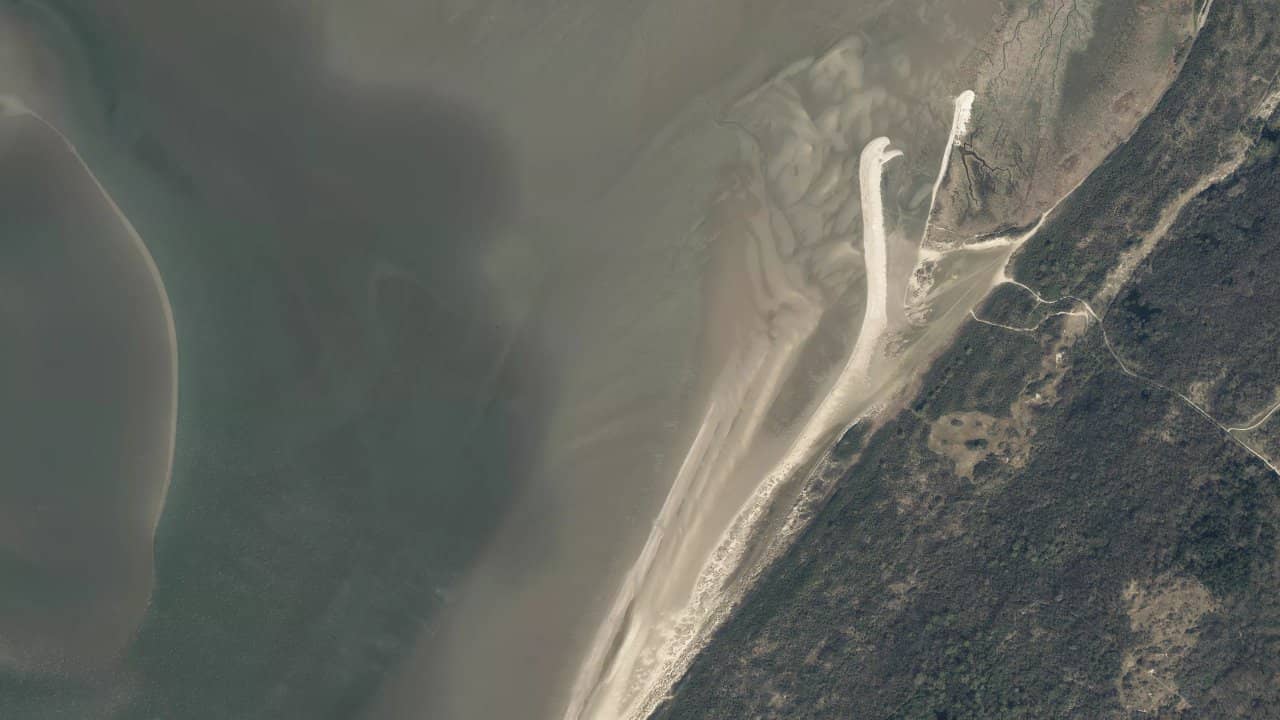
The spot is described as a flat water area by available sources, with access suitable for beginners, as one can often stand and move in a shallow area. Public information emphasizes the need to read the signs on site and strictly respect the authorized navigation zones, as some parts of the site are prohibited for kiting.
Launching is done from the beach, in a sandy area, with a take-off zone to be managed properly so as not to disturb other users. The spot is interesting for working on transitions, first runs, and control in calm navigation, but it requires vigilance regarding local rules, which are a central point at Oostvoorne.
According to collected feedback, the spot is particularly consistent when the wind is well established and steady. However, as with many spots on the Dutch coast, it is important to monitor wind intensity and traffic, as the usable space can become limited if the water is crowded.
The best orientations are SW and NW, with a well-established onshore wind providing stable and usable navigation. Sources also confirm that the spot remains interesting with a regular flow coming from the southwest.
To make the most of the spot, it is better to aim for a steady wind but not excessively gusty, in order to maintain a clean navigation area. This spot becomes really relevant when the flow is consistent enough to exploit the shallow area without suffering too much variation.
The water is generally flat with some chop when the wind picks up or when the sea comes in more. It is not a wave spot: the main interest remains clean, accessible navigation focused on control.
The water relief can evolve with the tide and wind strength, but it remains in a rather readable environment. Available sources describe Oostvoorne as a flat water spot, confirming a fairly comfortable practice for learning and simple freestyle.
Currents are generally moderate at this type of coastal spot, but they can strengthen locally depending on the tide and the navigation area. It is important to stay alert near the zone boundaries, as flows can be more pronounced there.
The tide mainly influences accessibility and the width of the navigable area. At low tide, the spot becomes easier for beginners due to the shallow water, while at high tide navigation can be more comfortable but with less usable space depending on the sector.
With wind around 23 knots, the most consistent sizes often range around 7 to 9 m² for many body types. Lighter riders may sometimes stay on 6 to 8 m², while heavier riders will feel better on 9 to 11 m² depending on the board and the actual wind intensity.
As the spot can be exposed to rapid variations, it is useful to allow for a margin and adjust the choice to the actual strength on the water rather than just the announced value.
The dominant wind clearly comes from the southwest sector, with frequent extensions towards WSW according to sources and local feedback. The spot is also open to other directions, but the southwest appears to be the most reliable orientation for a clean session.
When the depression is well established, the wind can become strong and quite steady, making Oostvoorne interesting for riding without too much variation. With 23.1 knots reported in your data, we are looking at a solid power, suitable for riders capable of managing a real onshore wind.
The local climate is maritime, with conditions often cool and humid for a good part of the year. The best months indicated for riding are January, February, and November, which corresponds to a period that is often windier on the Dutch coast.
In winter and mid-season, the air remains cold and the water generally requires appropriate protection. In summer, temperatures become more pleasant, but the wind can be more irregular and conditions less consistent than during the cold months.
The depth is generally progressive with a sandy bottom. According to available feedback, one can often stand in a good part of the usable area, making the spot reassuring for learning.
This type of bottom also facilitates the relaunching of the kite and limits the risk related to submerged obstacles. However, the spot should be read carefully, as the usable sectors can change depending on the tide and the authorized area.
The water remains cold for a large part of the year, especially between autumn and spring. In winter, sessions practically require a thick wetsuit, often with a hood and gloves depending on individual sensitivity.
In spring and summer, the temperature becomes more bearable, but it generally remains cool compared to spots further south. Even in the beautiful season, good thermal protection is still recommended for comfortable riding.