
Royaume-Uni
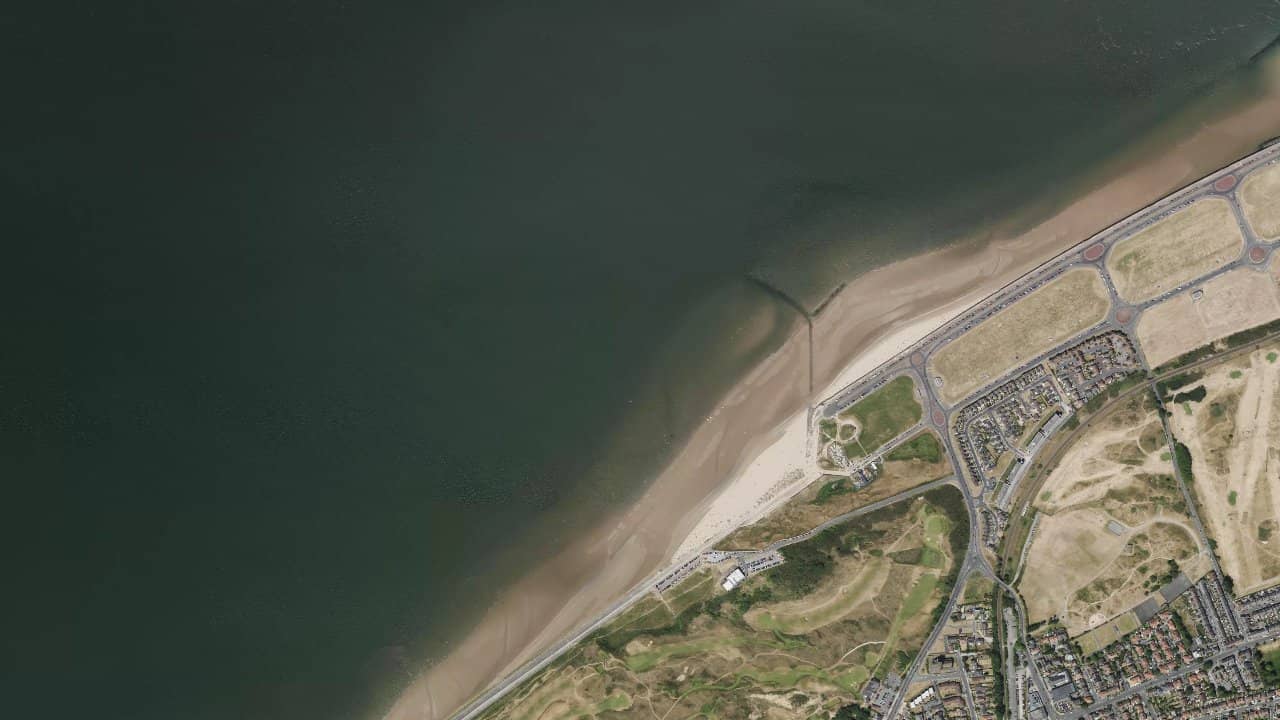
Wallasey Beach, in New Brighton, is a popular spot for riders in the North-West due to its large sandy areas and easy access from the waterfront. It is a place known for its consistent conditions at low tide and its very local atmosphere.
The spot works well when the tide exposes the beach widely, providing a more comfortable and readable navigation area for kiting. It is a practical spot for progression, freeride, or enjoying accessible water when conditions are well set.
The wind data shown here comes from ERA5 (via Open-Meteo) over 4 years, reprocessed to reflect realistic conditions.
👉 Average wind has been calibrated to avoid the usual underestimation of models.
👉 Gusts have been corrected by a median ratio to avoid unrealistic extreme values.
👉 Each day is summarized by the median wind (P50) observed during useful hours (8am–8pm), then classified into wind ranges.
👉 The weighted mode mixes average wind and gusts to best reflect felt wind.
Wallasey Beach mainly works with a side-shore to side-on wind depending on the exact orientation, allowing for clean navigation along the beach without too much pressure from the onshore wind. Local sources indicate that the spot works on a wide variety of wind directions on the Wirral peninsula, but the best sessions remain those where the wind maintains a cross/oblique component relative to the shore.
The water conditions depend heavily on the tide. At mid-low tide, there is a vast clear area with plenty of space to launch, take off, and kite safely. A local source even describes a lagoon of about 2 km visible around low tide, confirming the flat potential of the spot in the right window. However, at high tide, the space reduces significantly, and the water becomes more agitated and choppy, with less beach available for rigging and launching. Therefore, it is advisable to aim for the windows around low tide and avoid kiting too close to high tide, especially during large tides.
Launching takes place from the large beach, with a more comfortable take-off area when the sand is well exposed. The spot is suitable for freeride, freestyle, and learning when the tide leaves enough space, but it becomes more technical if one arrives during a high coefficient or at a time when the beach is very reduced. Local traffic can also vary depending on the attendance at the waterfront, so it is better to keep a clear launch area and remain attentive to other users.
The best sessions occur with a wind west to northwest, or with a well-established side-shore to side-on component relative to the beach. These are the most interesting orientations for maintaining good control and enjoying clean navigation along the shore.
The spot performs best when the tide is low or falling, with enough beach to rig and a cleaner water area. A regular, stable, and not too gusty wind clearly provides the best conditions to exploit Wallasey Beach.
The water is generally flat to slightly choppy at low tide, with wide calm areas when the beach is well exposed. This makes the spot interesting for freeride and maneuvers, especially in the large lagoon formed by the tide.
At high tide, the water becomes more choppy and significantly less comfortable, with reduced navigation space and a more agitated sea. The contrast between low and high tide is therefore strong, and it is the tide that largely determines the type of session possible.
Currents and tides are important elements at this spot, as the navigable space changes quickly with the water level. The current can be more pronounced near channel areas and in passages where the water narrows, especially when the tide rises or falls rapidly.
The spot is easier to read around low tide, but one must remain vigilant during high coefficients, as the useful window can close quickly. At high tide, the water pressure and lack of beach make the spot more demanding, and the downwind drift can become more sensitive if the rider strays too far from their starting area.
The most useful sizes often range between 8 and 11 m² for an average build, with a 9 m² as the most versatile kite for this type of spot. In winter or with strong wind, a 7 to 8 m² can quickly become necessary.
When the wind is more moderate, a 10 to 12 m² may be more suitable for taking advantage of long freeride sessions. The choice depends heavily on the actual strength of the flow and the tide level, as the spot's behavior changes quickly between low and high tide.
The dominant wind regime in this area is generally oriented west to northwest, with more frequent strong wind days in the cold season. The wind data available for New Brighton also shows episodes of wind from east to southeast, but it is mainly the west sector flows that best match the functioning of the spot.
In the region, the wind can take on a more regular character when Atlantic depressions pass offshore. At Wallasey Beach, this often results in sessions with well-established wind, sometimes gusty depending on the front and the stability of the air mass. The useful strength for kiting often falls within a range of medium to strong wind, with stronger peaks in winter.
The climate of New Brighton is typically oceanic, with cool winters, moderate summers, and changing weather. The best periods listed for this spot are January, February, March, and December, which correspond to the windiest and most consistent season on the North-West English coast.
In practice, one often kites with fresh, humid air and a cold feeling intensified by the wind. In winter, conditions are more powerful but also more demanding, while in spring, there is often a good compromise between wind, light, and attendance. Summer remains possible, but it is generally less consistent for kiting in this area.
The depth is gradual on the beach, and the navigation area becomes interesting when the tide widely exposes the sandbank. A local source mentions a large lagoon area with shallow water around low tide, confirming a generally favorable bottom for kiting.
The bottom is mainly sandy, which is reassuring for launching and learning. However, the depth changes quickly with the tide, and deeper or more agitated areas can appear near channels and as high tide approaches.
The water remains cold for most of the year on the North-West coast of England. In winter and early spring, it is particularly cold and requires a thick wetsuit, often with a hood, gloves, and booties.
In spring and summer, the temperature rises a bit, but it remains cool compared to spots further south. In practice, one should consider Wallasey Beach as a spot where one kites in full neoprene for a large part of the year.