Espagne
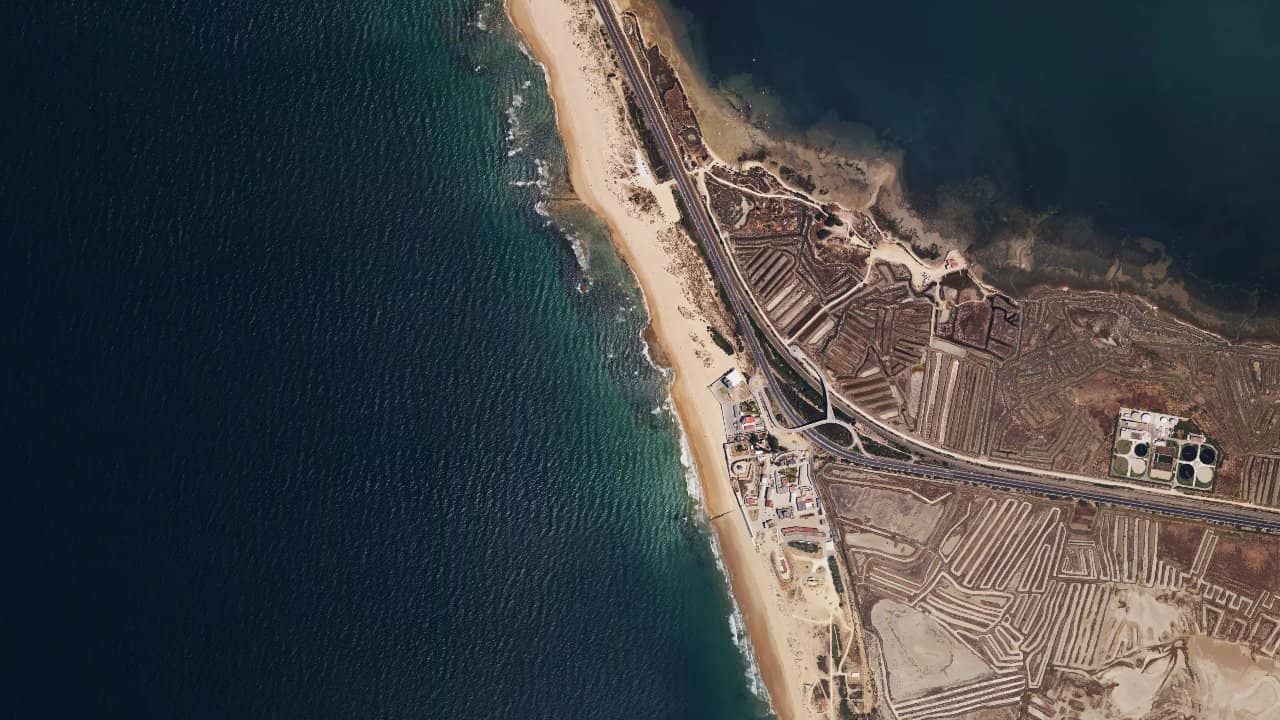
Playa Canina de Cadiz, in Cadiz, is a convenient urban spot for kitesurfing when the conditions align. The beach offers a simple setting, with direct access from the city and a rather local atmosphere.
It’s a spot that can save the day for a quick session, especially when the wind is good in the bay. The environment is open, but one must stay attentive to the launch area and coastal traffic.
Les données de vent affichées ici proviennent d’ERA5 (via Open-Meteo) sur 4 ans, retraitées pour refléter des conditions réalistes.
👉 Le vent moyen a été calibré pour éviter la sous-estimation habituelle des modèles.
👉 Les rafales ont été corrigées par un ratio médian afin d’éviter des valeurs extrêmes irréalistes.
👉 Chaque jour est résumé par le vent médian (P50) observé pendant les heures utiles (8h–20h), puis classé dans des plages de vent.
👉 Le mode pondéré mélange vent moyen et rafales pour refléter au mieux le vent ressenti.
The spot mainly works with a wind from W to NW, often in side-on to side-shore depending on the exact orientation of the flow relative to the coastline. With wind around 22 knots, conditions become usable for an autonomous rider, but kitesurfing remains more comfortable when the wind is well established and steady. The launch area must be chosen carefully, as on this type of urban beach space can be limited and one must keep room for takeoff and landing.
The water surface depends a lot on the tide and local exposure. Generally, one finds a more choppy water than a lagoon water surface, with chop present as soon as the wind strengthens, and a smoother edge only during the calmest phases. Kitesurfing should be done while keeping distance from swimmers, passage areas, and any fixed obstacles on the beach. A clean, safe, and sufficiently clear launch is necessary to rig without disturbing the public.
On a spot like this, the most interesting areas are generally those where the wind arrives well from the side and where one maintains a safety margin upwind and downwind. Departures and arrivals should be made in a clear area, with a good reading of the space before any launch. During busy periods, organization at the water's edge is as important as the strength of the wind.
The best conditions occur with a wind from W to NW, steady, around 18 to 25 knots. In this range, the spot becomes more usable and the kitesurfing remains cleaner for an autonomous rider.
The spot is more interesting when the wind is consistent enough to allow for a clean run, with a well-crossed or slightly side-on arrival. Too onshore wind makes the beach more crowded, and too offshore wind becomes trickier for returning to the shore.
The water surface is most often of the chop type, with a surface that forms quickly as the wind strengthens. There can be cleaner phases when the sea is regular, but it’s not a spot known for offering perfect flat water.
When the wind is strong, the surface becomes more irregular and requires some skill in support. Riders who enjoy engaged freestyle will find usable water here, but one must accept a livelier water surface than in a lagoon.
Currents are generally moderate, but they can strengthen locally depending on the tide and proximity to passes or water circulation areas. One must monitor the current offshore, especially when returning to the beach.
The tide mainly influences the width of the available beach and the ease of launching. At high tide, the space at the edge can decrease, making takeoff more technical. At low tide, one often gains comfort for setup, but it’s important to check that no shallow or cluttered areas hinder the exit.
With the most frequent conditions, the most useful sizes are generally 8 m², 9 m², and 10 m². In stronger winds, a 7 m² can become the right option, especially for an average or light build.
When the wind drops, an 11 m² can be used to extend the session, but one must always adapt the kite to the water surface and the presence of chop. With 22 knots, an 8 m² or 9 m² is often the most consistent range for many riders.
The local wind is often dominated by flows from W to NW, with sometimes more irregular days depending on regional circulation. In the Cadiz area, this type of wind frequently arrives with a good cross component, making it a favorable setup for kitesurfing when the spot is well exposed.
With 22 knots, we are in an interesting wind range for most intermediate riders with a medium-sized kite. When the wind is stable, the session is cleaner and more comfortable; when it is unstable or gusty, one must be more cautious during takeoff and return to the shore.
The climate in Cadiz is of the oceanic Mediterranean type, with mild winters and hot summers. Kitesurfing is possible for a large part of the year, but the best sensations are often found in spring and autumn, when the temperature remains pleasant and the wind is more usable.
In summer, the heat increases significantly and the beach can be very crowded. In winter, the air often remains milder than in the rest of the Atlantic Europe, allowing for kitesurfing with suitable gear and versatile equipment.
The depth is generally gradual near the shore, with a mostly sandy bottom. One can often stand at a good distance from the start, which facilitates preparation, but it’s important to check the exact state of the bottom depending on the tide and sand movements.
The sandy bottom makes the spot easier to manage than a rocky area, but one should not neglect local depth changes. During the season and depending on sandbanks, access to the water can vary, so a visual reconnaissance before rigging remains useful.
The water is most pleasant between late spring and early autumn, with temperatures often more comfortable for kitesurfing in a shorty or light wetsuit. In mid-summer, the water is warmest and the session becomes much easier to prepare.
In winter, the water temperature drops and a thicker wetsuit becomes necessary. Sessions remain possible, but the thermal feeling depends a lot on the wind and the time spent in the water.