Pays-Bas
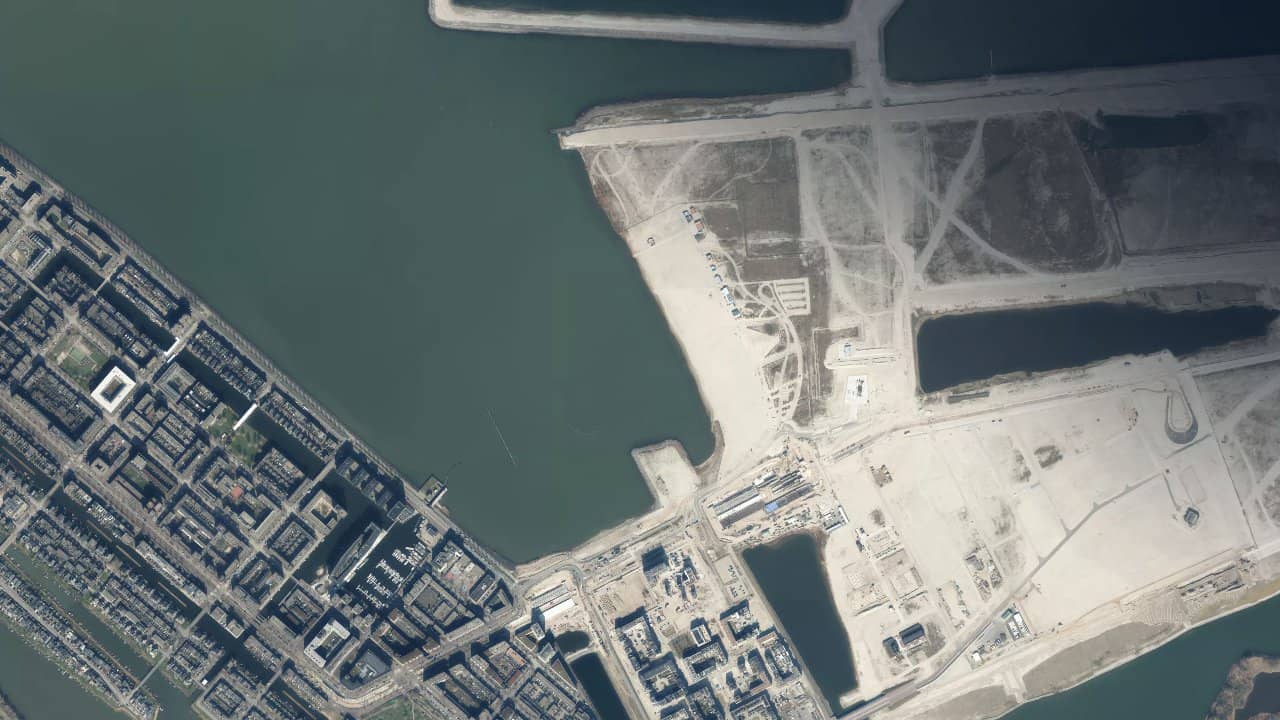
Strand IJburg is the urban beach of Amsterdam Oost, located on the IJburg archipelago. It is a convenient spot for kitesurfing near the city, with a simple atmosphere and mostly local visitors.
The site is known for its easy access and well-established water sports activities. For kitesurfing, the appeal of the spot mainly comes from its regular wind conditions and accessible water, rather than a wild setting.
Les données de vent affichées ici proviennent d’ERA5 (via Open-Meteo) sur 4 ans, retraitées pour refléter des conditions réalistes.
👉 Le vent moyen a été calibré pour éviter la sous-estimation habituelle des modèles.
👉 Les rafales ont été corrigées par un ratio médian afin d’éviter des valeurs extrêmes irréalistes.
👉 Chaque jour est résumé par le vent médian (P50) observé pendant les heures utiles (8h–20h), puis classé dans des plages de vent.
👉 Le mode pondéré mélange vent moyen et rafales pour refléter au mieux le vent ressenti.
Strand IJburg mainly works with a wind from the east to northeast sector, with an orientation often side-on to side-shore depending on the exact angle. The spot is indicated as a flat and chop type site, which corresponds to a rather flat water surface in the bay, with chop when the wind strengthens or when the water surface forms more. Local sources and spot guides place IJburg among the spots near Amsterdam suitable for kitesurfing when conditions are well oriented, even if the place remains more technical than a large beach break on the northern North Sea coast.
The launch is done from the urban beach, with space to set up and prepare the kite, but one must remain attentive to coexistence with other users, as the site is also frequented for swimming and leisure. The takeoff must remain clean and controlled, with a compact setup and particular vigilance on the border area, where space can be more limited than one might imagine on a classic beach spot. The water surface is generally more interesting when the wind comes well from the east or northeast, and it becomes less comfortable if the wind shifts too far off or too on, as the quality of the edge can degrade quickly.

The best sessions occur with a NW to S wind, clean and stable, around 18 to 25 knots. In this range, the spot remains readable, with enough power to go upwind properly and enjoy an exploitable water surface.
The site stands out especially when the wind is well oriented to create consistent pull without making the launch too complicated. The most favorable months are generally those when these wind patterns return more often, with a particular mention for February in the provided data.
The water surface is generally flat with chop. In moderate and well-oriented wind, the water is quite clean for practicing maneuvers, with a flatter surface than on open sea spots.
When the wind picks up or the orientation becomes less favorable, the water surface can become choppy. The area remains interesting for freeride and freefly, but less comfortable for long and fast runs than a perfectly smooth water surface.
The current is generally weak in this sheltered area, but one must remain attentive to variations related to water levels and local movements in the bay. The site is not known for strong sea currents like in a narrow passage, but vigilance is still necessary near the shoreline.
The tide mainly affects the comfort of navigation and the size of the usable area, rather than a true reversing current. When the water rises or falls, it is important to monitor the proximity to the shore and maintain enough margin to return easily to the beach.
For most riders, the most useful sizes here are 8 m², 9 m², and 10 m². With sustained wind close to 21.5 knots, an 8 or 9 will often be the right choice for an average build.
Lighter riders can use a 7 m² if the wind picks up, while heavier riders or on calmer days will prefer a 10 m² or 11 m². In winter, it is better to keep a slightly more powerful kite to compensate for the sometimes irregular wind.
The useful wind at Strand IJburg most often comes from the NE and E sectors, with periods that can also work in N depending on the weather situations. Spot guides mention an interesting site with east to northeast wind, confirming that continental flows are the most sought after here.
In practice, a wind around 21 to 22 knots corresponds to a good range for many riders, especially in freeride. Days when the breeze is clean and stable are the best, while winds that are too irregular or too shifting make the spot less readable.
The climate around Amsterdam is of the temperate oceanic type, with mild summers and cool, often humid and windy winters. The most pleasant months for kitesurfing are generally from spring to autumn, but the spot can also work in winter if the wind is well established.
In practice, the weather is changeable, and one should expect cool conditions for a large part of the year. The best period is often when the days are longer and the east or northeast winds are consistent enough to enjoy the spot without suffering too much from the cold.
The depth is generally gradual and the bottom appears rather sandy in the practice area. This is reassuring for launching maneuvers and for the phases when one must return on foot near the shore.
However, the spot remains an urban site that should be read carefully, as the usable depth can vary depending on the exact area and the state of the water. Therefore, one should avoid assuming that the entire sector is uniform, even if the overall area remains accessible.
The water is cold for a large part of the year, especially from autumn to early spring. In winter, a thick wetsuit, booties, and often gloves are necessary for comfortable navigation.
In summer, the temperature becomes more bearable, but it generally remains cool for a spot in a lake or bay in northwest Europe. The warm season improves overall comfort, without turning the spot into warm water.