Lac du Der

Lac du Der - Plage de Nuisement

France

🎓Déb · Inter · Conf
🌊Choppy
💨18.2 nd
☀️12.3°C

Lac du Der

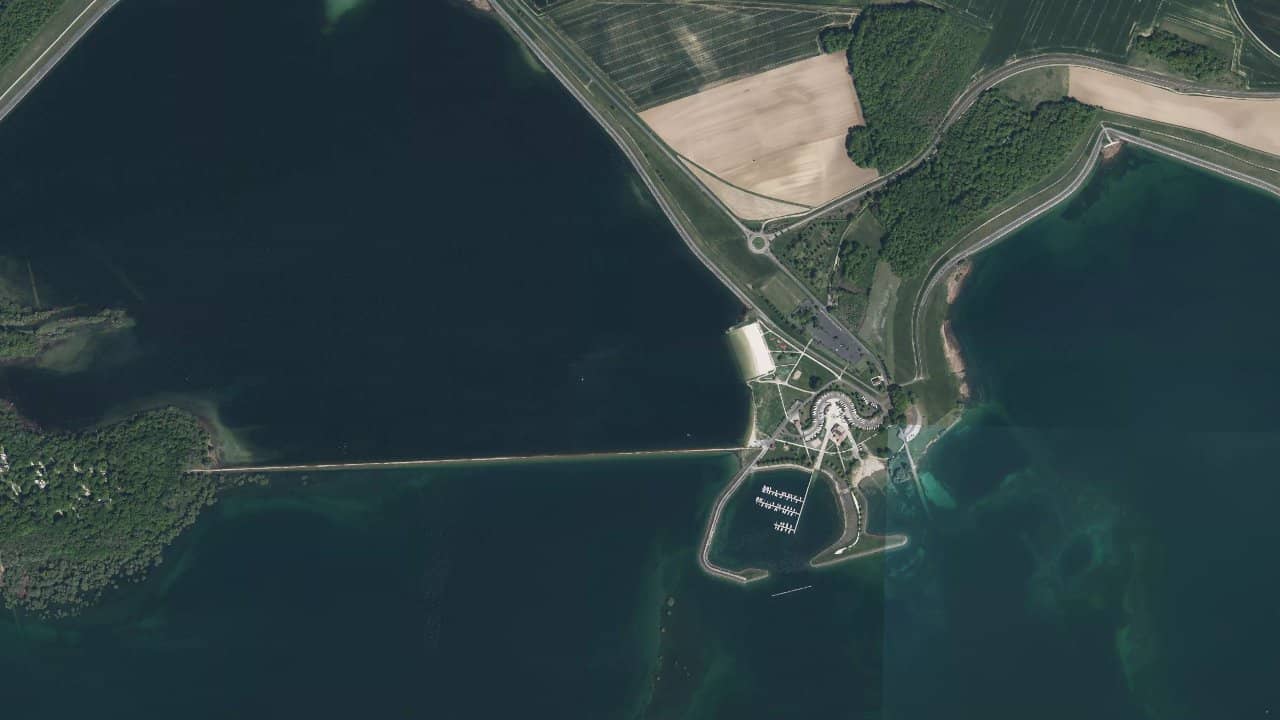
The Nuisement beach, on the shores of the Lake Der, is a large freshwater spot surrounded by forest and grassy dikes. Access is easy by road with parking close to the launch area, making it a popular place as soon as the wind picks up.

In terms of atmosphere, it is a versatile spot where bathers, families, and riders cross paths, especially on nice days. Outside the summer season, the beach is quieter, and one can enjoy a clear water surface with a large area to prepare and launch kites.

Les données de vent affichées ici proviennent d’ERA5 (via Open-Meteo) sur 4 ans, retraitées pour refléter des conditions réalistes.
👉 Le vent moyen a été calibré pour éviter la sous-estimation habituelle des modèles.
👉 Les rafales ont été corrigées par un ratio médian afin d’éviter des valeurs extrêmes irréalistes.
👉 Chaque jour est résumé par le vent médian (P50) observé pendant les heures utiles (8h–20h), puis classé dans des plages de vent.
👉 Le mode pondéré mélange vent moyen et rafales pour refléter au mieux le vent ressenti.

  • 🟢 10–16 nds : vent faible mais navigable (notamment en foil).
  • 🟡 16–22 nds : plage idéale, conditions confortables pour la majorité.
  • 🔴 22–28 nds : vent fort, réservé aux riders expérimentés.
  • 🟣 28+ nds : conditions extrêmes, navigation engagée.

Localisation & Points d'intérêt

Informations utiles

Type d’eau
Profondeur
Navigabilité
Marée haute
chopchop
Pied
Oui
Marée basse
chopchop
Pied
Oui
Conditions de navigation

Lake Der is a large inland water body, with a level that varies according to the seasons and dam management. From March to autumn, when the lake is well filled, one can navigate over a large expanse of water in front of Nuisement beach with a clear area for launching. The beach is sandy with grass areas set back, allowing for comfortable rigging and launching on the upper beach.

The most suitable wind orientations are those arriving side-shore to side-on relative to the beach, particularly flows from SW, W, and NW. These orientations provide a return to the coast and a usable water surface over a large width. More offshore or truly landward winds (E, NE) should be avoided for classic kitesurfing, as they become irregular with gusts and make returning to shore more uncertain.

The water surface is generally flat to choppy. In moderate wind, there is a regular small chop, ideal for working on maneuvers and old school freestyle. When the wind strengthens, the chop becomes more pronounced with small ramps for jumps, but one remains far from the wave conditions of a marine spot. The orientation of the lake allows for long runs, especially when the wind crosses the entire length of the water surface.

The main navigation area is located in front of the beach, while keeping a reasonable distance from the swimming areas in summer. Buoys and signs may delimit the spaces, and it is important to respect these zones to avoid conflicts with other lake users. In high season, it is preferable to move upwind or downwind of the monitored swimming area to maintain sufficient maneuvering space.

Launching is done smoothly from the sandy shore, with a fairly gradual slope. One can take the time to set up in shallow water before heading out. Take-off and landing are done on the beach or on the grass strips upstream, being careful of pedestrians, towels, and potential obstacles. The wind can be a bit more irregular at the immediate edge due to vegetation and reliefs, but it becomes cleaner after a few dozen meters offshore.

In autumn and winter, the lake may be partially lower, revealing banks and shallower areas in some places. One must then remain attentive to changes in water color and any visible markers to avoid overly shallow or cluttered areas. Overall, the spot remains quite forgiving for depth and space, making it a favored lake for progression.

Vent ideal
Sdominant
SWdominant
W
NW

The ideal conditions for kiting at Nuisement beach occur with a wind from W to NW, side-shore to side-on, between about 15 and 25 knots. This type of wind crosses the lake well, remains sufficiently regular, and naturally brings riders back to the beach, which is reassuring for most.

A slightly choppy water surface with a well-filled lake in spring or autumn offers an excellent compromise between safety, space, and comfort of navigation.

État de la mer

The water surface of Lake Der is generally flat to choppy. In light to moderate winds, the surface remains relatively smooth with a small chop ideal for freeride, cruising, and learning transitions or jumps. There are no formed waves like in the sea, making the spot very accessible for working on technique.

When the wind strengthens, the chop increases with small water steps that can serve as a ramp for jumps. The size of the water surface allows finding more sheltered or more exposed edges to the chop depending on the wind direction. The absence of swell, however, makes navigation more predictable, without series of waves to manage at the shore.

Courants marins

As an artificial lake, Lake Der does not experience tides, and there is no significant current comparable to that of the sea. However, one can feel a slight water movement related to the wind or the hydraulic management of the dam, but it remains very weak for kitesurfing.

The lake level varies according to the season and regulatory needs, which can change the width of the beach and the distance to deeper areas, but without creating dangerous currents for riders.

Taille de kite recommandée

At this lake spot subject to Atlantic depressions, riders most often use intermediate-sized kites. For an average-sized rider (70–80 kg), sizes around 9 m² to 12 m² cover a large part of the sessions. On windier autumn days or during the passage of strong fronts, smaller kites around 7–8 m² may be necessary.

Lighter riders can often be comfortable between 7 and 10 m², while heavier riders or those using twin-tips in marginal wind should consider kites of 12–14 m² as a supplement.

Météo & vent

The wind regime of Lake Der is typical of the French inland. The spot mainly works with disturbed flows from the west and northwest that accompany the passage of depressions. These situations bring winds from W to NW often usable for kitesurfing, with strengths ranging from 12 to 25 knots depending on the day. The wind can be a bit irregular, with variations in strength and direction during the same session.

In summer, local thermals are more limited than on the coast, but one can still enjoy reinforced breezes in the afternoons on sunny days, often from the W to SW at moderate strength. In autumn and spring, Atlantic depressions bring the windiest and most regular episodes, making these seasons appreciated by local riders.

Climat

Lake Der is located in the Grand Est, with a marked continental climate. Winters are cool to cold, with temperatures that can remain close to 0 °C in the mornings for several days, and days are often gray and windy. Spring brings milder temperatures, often between 10 and 18 °C, with interesting regular wind episodes for kiting.

Summer is generally mild to hot, with maximum temperatures frequently between 22 and 28 °C and sometimes higher peaks during heatwaves. This is the busiest time on the beach, especially for bathers. Autumn sees the return of depression systems with wind and temperatures gradually dropping between 10 and 20 °C, still offering great sessions for those well-equipped in neoprene.

Profondeur

The depth is generally gradual in front of Nuisement beach, with shallow water for several dozen meters, which reassures practitioners in the learning phase. The bottom is mainly sandy with some areas of mud or small gravel, but without marked reliefs like rocks or reefs.

When the lake level is high, one quickly reaches an area where one can no longer stand, while during lower level periods, the shallow area can extend further. It remains a rather forgiving environment for kitesurfing in freshwater.

Température de l’eau

In winter, the water temperature of Lake Der often drops around 4 to 7 °C, which requires a thick full suit, booties, and sometimes gloves. In spring, the water gradually rises to 10 to 15 °C, allowing for more comfortable navigation with a 4/3 or 5/4 depending on individual sensitivity.

In summer, the water can reach pleasant temperatures around 20 to 24 °C during warm periods, allowing for thinner suits or even a shorty for the more resilient. In autumn, the temperature gradually drops back to 12 to 18 °C, with still great sessions in intermediate suits.

Avis des kitesurfers

Chargement des avis...

Laisser un avis

0/500 caractères

Votre avis sera modéré avant publication

← Retour à la recherche